Table of Contents
This is not indicated to be an extensive checklist yet is created merely to offer you a feeling of what analytical psychology is all around. The personal subconscious represents whatever within the person's mind that is unknown to them. One of the distinct characteristics of depth psychology is that it suggests multiple levels of the unconscious.
For Jung, the collective unconscious is a repository of prehistoric pictures (archetypes) and behavioral patterns that are global (cross-cultural) and age-old. Jung took into consideration these pictures "cumulative" because they were not acquired by individuals in their lifetime. That is, the archetypes within the collective subconscious really did not stand for discovered actions. They were easily accessible to all.
Sheldrake, Morphic Vibration: The Nature of Formative Causation, 2009.) The mind represents the completeness of one's being, consisting of the body, mind, instincts, soul, and spirit. For Jung, there was an individual psyche relevant to the individual's individuality and lived experiences, and a collective psyche shared by all. In modern psychology, the term psyche is sparsely utilized, as it has actually been replaced by mind.
How Telehealth Trauma Therapy Works
Each of us has a leading function and an inferior feature. Your is your primary methods of examining details. Your is the reverse of your dominant feature; it represents your weakest muscular tissue in terms of processing information.
These primitive images stand for the set patterns of behaviors found in the cumulative subconscious. Archetypes stand for semi-autonomous subpersonalities within the psyche that influence most human habits.
Addressing Relational Trauma Patterns
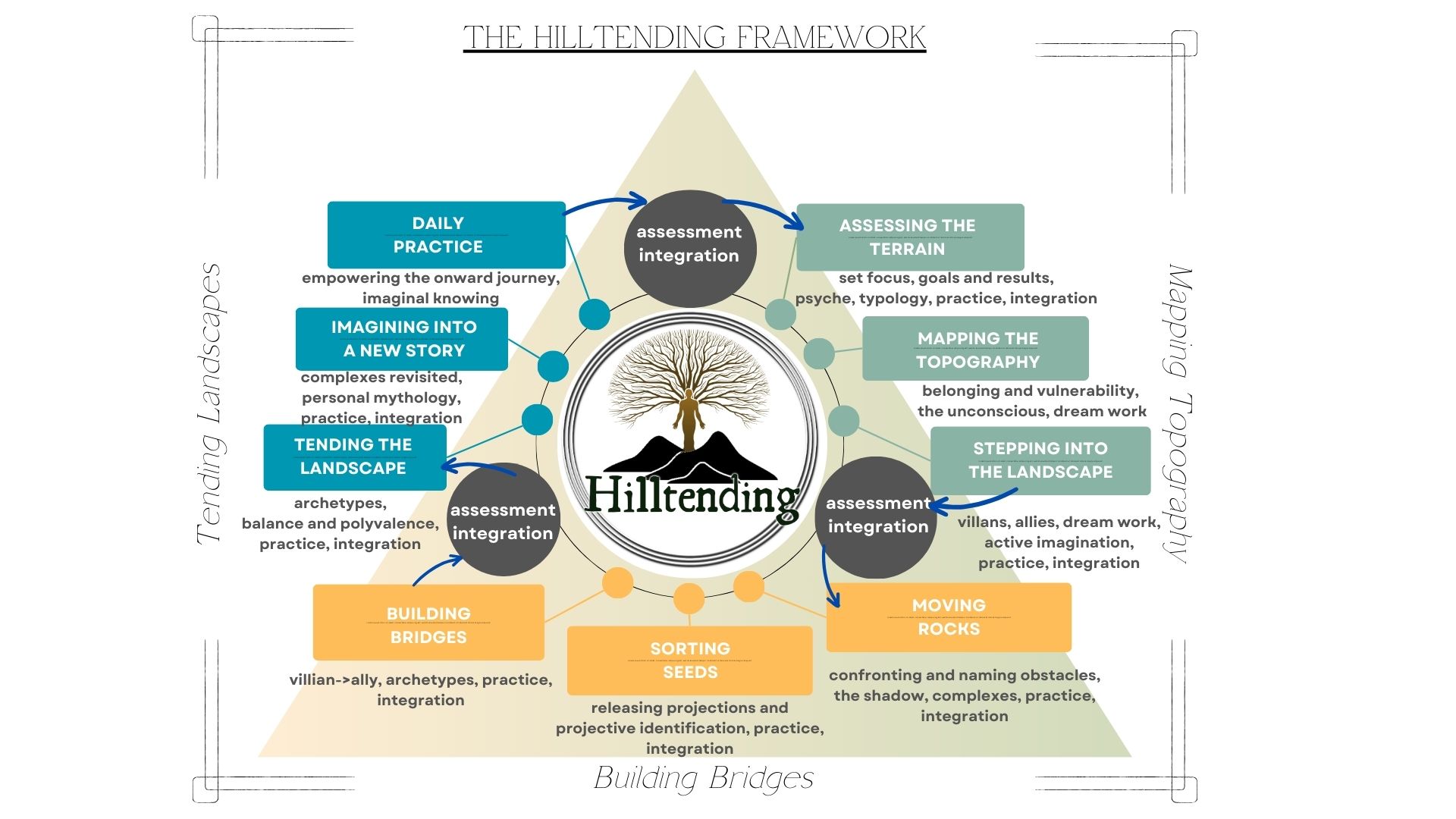
See: and While the archetypes are universal and impersonal, the facilities are totally personal. An individual complicated is a collection of feelings based on the individual's previous experiences.
A man with a mom complex can not transport his masculine energy to become a self-governing, mature grownup. The darkness stands for everything the private separations or cuts off from themselves in early development. It's occasionally referred to as the disowned self. Being familiar with and integrating the darkness is a vital initial step in one's individuation.
Insurance Coverage for Trauma Therapy in Auburn, CA
Jung saw the anima-animus as enlivening spirits or spirits within males and ladies. For Jung, anima and bad blood are important structure blocks in the psychic structure of every guy and female.
When it comes to C.G. Jung's logical psychology, both main approaches are: Desire evaluation Energetic creative imagination The primary objective of depth psychology is to develop consciousness so the individual can bring the unconscious to awareness to attain psychic integrity. Clients (the analysands) consult with their expert generally weekly.
Desire analysis (or "desire job") was the central method for disclosing the psyche in Jung's analytical technique. For Jung, fantasizes given a method for us to connect the void between our aware mind and our unconscious.
Jung made use of energetic creative imagination to enhance his desire evaluation. See: Most of the overviews linked above consist of a "analysis checklist" for those that intend to discover these ideas in higher information. Below, I'll highlight a couple of good "entry points" to this job: Memories, Dreams, Reflections by C.G. Jung The Portable Jung modified by Joseph Campbell Individuation in Fairytale by Marie-Louise von Franz The Darkness and Wickedness in Fairytale by Marie-Louise von Franz Considering that 2014, I've been releasing extensive guides on this website.
Cognitive Approaches to Image Transformation therapy
In enhancement to the guides provided above, see also: Estimate is a vital idea in psychoanalytic concept. This overview, inspired by Jungian Robert A. Johnson's superb publication Inner Gold, highlights just how we frequently predict the very best parts of ourselves onto others (and just how we can take them back). The conscious mind (or ego) frequently stands up to inner processes like shadow work.
This extensive overview checks out the archetype of the Infinite Child. Exceptional ideas for beginners and experienced specialists across a series of Jungian-related subjects.
Archetypes have actually likewise been significant in forming religious beliefs and practices. The concept of the Wise Old Guy, standing for wisdom and support, shows up in different religious and spiritual customs.
Retraining Traumatic Memory Networks
Making use of archetypes in New Age techniques is frequently related to the belief in the interconnectedness of all beings and the idea of a cumulative consciousness that transcends specific identifications. These ideas are not viewed as methods to do magic or see the future. They ar seen as allegories with wich we might acquire an outsider perspective to undertand ourselves.
Jung, a Swiss psychoanalyst and psychoanalyst, introduced the concepts of the subconscious mind, archetypes, and the collective unconscious. Jung's letter to Costs W, dated January 30, 1961, began by acknowledging the significance of AA in aiding individuals battling with alcohol addiction.

Navigation
Latest Posts
Recognizing Numbing in Food Rituals
What to Expect Throughout EMDR Therapy in Auburn, CA
How EMDR Respects Your Window of Tolerance